
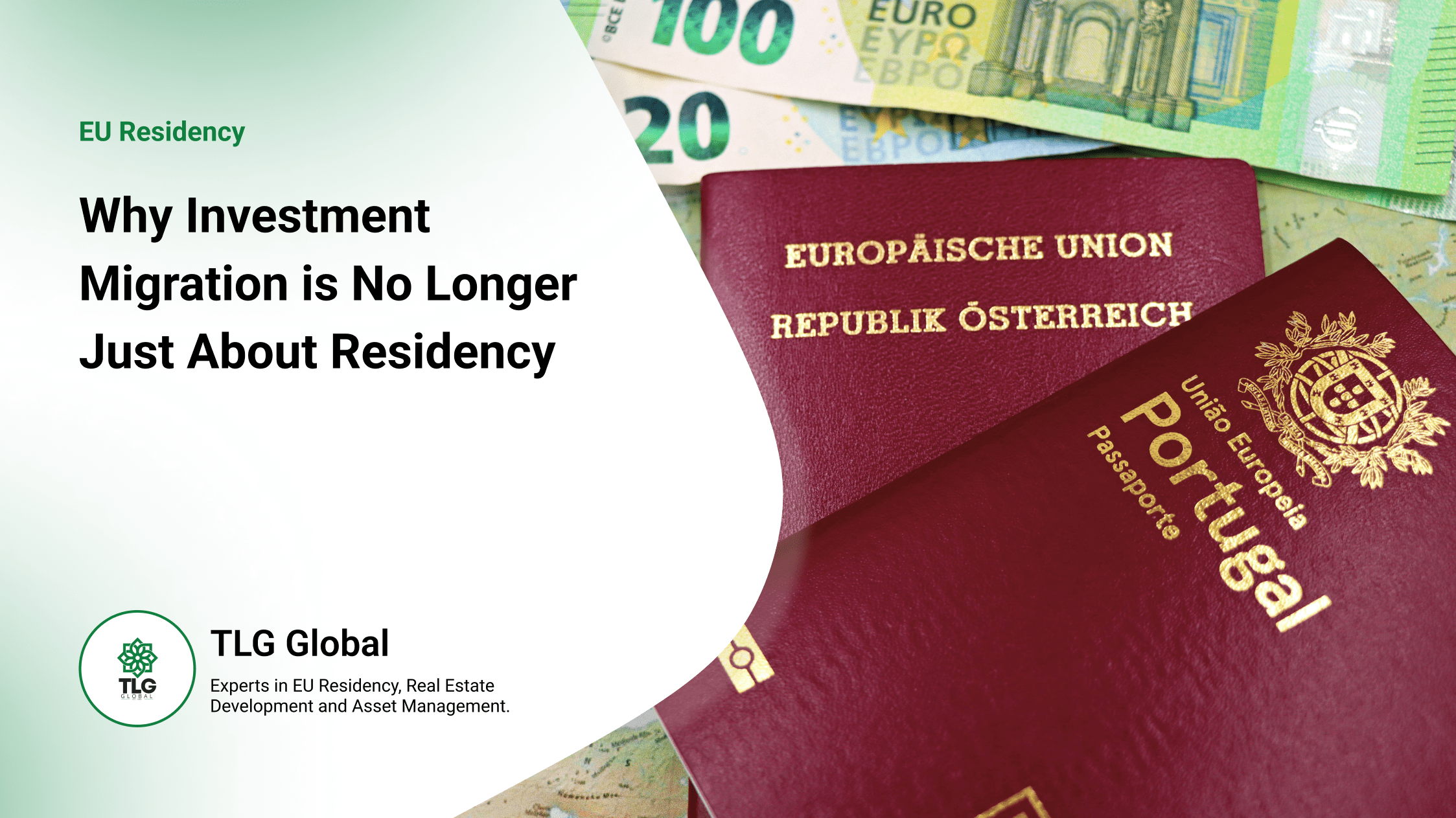
For years, we’ve watched investors treat the Golden Visa as a simple transaction or an ultimate convenience.
It was a simple, transactional exchange: you wrote a check, bought a property or a fund share, and in return, you received a residency card. You didn’t have to move, you didn’t have to hire anyone, and you didn’t have to change your life.
But as we move through 2026, that “hands-off” era is hitting a wall. The investment migration industry has split into two very different camps, and for the serious investor, the choice between them is no longer just about the money; instead, it’s about speed, risk, and political survival.
The “Capital vs. Mobility” Trap
On one side, you have the traditional Golden Visa. On paper, it’s still the easiest route. You invest €500,000 in a Portuguese fund, keep a minimal physical presence, and wait for your pathway to EU citizenship.
However, the “simplicity” of this model has become its biggest weakness. These programs are just money deals, so they draw a lot of political heat. In 2025, the European Commission pushed hard on EU countries. They said EU citizenship gives big rights, like free travel in 27 nations, and it shouldn’t be sold.
This political heat has led to a “processing nightmare.” While the demand is still high, the backlogs are staggering. In Portugal, Golden Visa applicants often face waits of over two years just to get processed. If you are seeking residency to solve an immediate need for global mobility, a two-year delay effectively defeats the entire purpose of the investment.
The Rise of the HQA® Model: Merit Over Money
On the other side of the divide is the High-Value Quality Activity (HQA®) Visa. This represents the “New Guard” of investment migration. Unlike the Golden Visa, which trades capital for a permit, the HQA® model makes residency contingent on innovation and job creation.
At TLG Global, this shift has led us to focus on hospitality-led custom investment options tied to Europe’s popular Golden Visa programs. These lead to European residency. Latvia and Portugal’s Golden Visas stand out in Europe. They let investors and families get residency through approved investments.
In 2026, Latvia’s Golden Visa, where processing timelines are measured in weeks rather than years, investors are effectively compressing their exposure to regulatory risk. Unlike slow Mediterranean programs with long waits, Latvia uses digital tools for approvals in 30 to 90 days. For an investor, this isn’t just a lower entry price; it’s a significantly reduced “time-at-risk” window, allowing families to secure their Schengen mobility rights before global policy shifts can move the goalposts once again.
By shifting the focus from a simple wire transfer to a partnership with an established developer like TLG, investors move from being a “buyer” to a “contributor.” This year, in 2026, we are demonstrating this commitment through two major new hotel openings in Fátima and Alcácer do Sal, Portugal. These projects don’t just provide luxury hospitality; they serve as high-value economic engines that align perfectly with the “Merit-Based” residency criteria that European authorities now favor.
Why “Doing More” Actually Lowers Your Risk
It sounds counterintuitive! Why would an investor want the “operational complexity” of starting a business when they could just buy a fund? The answer lies in Regulatory Certainty.
- Political Immunity: When a program creates local jobs and funds university research, it aligns with what the government actually wants. While Golden Visas face constant threats of being shut down (like we saw with Malta’s citizenship program or Spain’s suspension of its visa), HQA programs face almost no domestic opposition.
- Institutional Approval: The EU actively encourages member states to attract researchers and entrepreneurs. By choosing a merit-based path, you are positioning yourself on the “right side” of European policy.
This strategic alignment is particularly critical as we navigate the legislative landscape of 2026. While traditional property-based visas are being phased out or subjected to “wealth taxes” in several EU nations, investments in active sectors such as TLG Global’s hospitality developments enjoy protected status. Governments view these as “productive capital” rather than “speculative capital.” Consequently, investors in these projects are often grandfathered into favourable rules even when broader immigration laws tighten, providing a layer of “Sovereign Insurance” that a standard fund or real estate purchase simply cannot offer.
- Speed as a Safe Haven: In a world where rules change fast, like Portugal’s sudden elimination of real estate investments in 2023, waiting two years for a visa is a massive risk. A 30-day approval means you are “in” before the goalposts can move again.
The Golden Visa isn’t dead, but its “risk profile” has changed. If you value simplicity above all else and don’t mind the political uncertainty or the multi-year wait, it remains an option. But you are banking on a system that the EU is actively trying to dismantle.
The HQA® model, pioneered by firms like Empowered Startups, is where the market is headed. It turns operational engagement into a competitive advantage. It solves the problems the Golden Visa created: the interminable delays, the reputational baggage, and the regulatory vulnerability.
The “Sovereign Agility” Model
Finally, the era of passive residency is fading. What replaces it is something far more strategic — the ability to move, operate, and adapt across jurisdictions.
In 2026, global mobility isn’t bought. It’s engineered.
Investment migration allows for Strategic Multi-Domiciliation. An investor might have:
- Business Residency in the UAE for its tax-efficient, global hub status.
- Schengen Access via a Greek Golden Visa for ease of movement across Europe.
- A “Safety Net” Passport from a Caribbean nation to ensure global mobility remains uninterrupted by regional conflicts.
Conclusion: The Era of “Sovereign Agility”
Investment migration in 2026 is no longer about “buying a passport.” It’s about Sovereign Agility, i.e., the ability to move quickly and legally between jurisdictions.
The future goes to those who offer real value and impact. Investors with firms like TLG Global prioritize speed and safety. They invest in active businesses that governments like. In 2026, global citizenship comes from the value you add and the smart ties you make, not just your wallet.
Share this article:
Related Blog Posts
Portugal Real Estate in 2026: Why Demand for Premium Residential and Commercial Spaces Remains Strong
Portugal is now a mature and globally recognized investment market with long-term fundamentals rather than a short-term opportunity.
The Rise of Secondary Cities: Why Global Investors Are Looking Beyond Lisbon – TLG Global Blog
In Portugal, everything was always about one place: Lisbon. The city has its hills, the iconic yellow trolleys, and a bustling technological scene…

The Evolving Landscape of European Residency: Why Portugal Remains a Global Favorite – TLG Global Blog
Portugal emerged as a hot spot among individuals looking for EU citizenship between 2024 and 2025…